Date

Time to read

8 min

Categories

Share

Why Keywords Will Always Matter in Organic Search

Search engines look nothing like they did in the era of keyword stuffing and "10 blue links." Today, users get AI Overviews, richer SERP features, and more conversational follow-ups right in the results, and brands are seeing lower click-through rates as a result.

So, it’s a fair question: Do keywords still matter?

Yes.

The difference now, and looking to the future, is while search has evolved, keywords are still the fastest means of mapping demand, intent, and revenue opportunities.

This doesn’t mean you pick a few one-size-fits-all keywords, plug them into your CMS, and forget about them for six months. You have to create comprehensive topic coverage, identify entities, and structure content that search engines and AI systems can reliably interpret and that readers can trust. Plus, you have to monitor data and re-strategize when necessary.

So how do you effectively integrate the best keywords into your marketing strategies to drive performance now and into your brand’s future? Here’s your roadmap.

What Do “Keywords” Mean to Organic Search Now and for Its Future?

Keywords mean everything to Organic Search.

If you’ve been using the web long enough to remember MapQuest, then you remember how tough it was to move from paper maps with every detail to digital ones without enough details to actually give directions.

An Organic Search strategy without keywords is essentially an early MapQuest download: A map that can’t give directions.

Keywords map how people get from point A: Wanting something, to point B: Acting on that want. Of course, humans don’t always take the most direct route from point A to point B, even when we’re using maps.

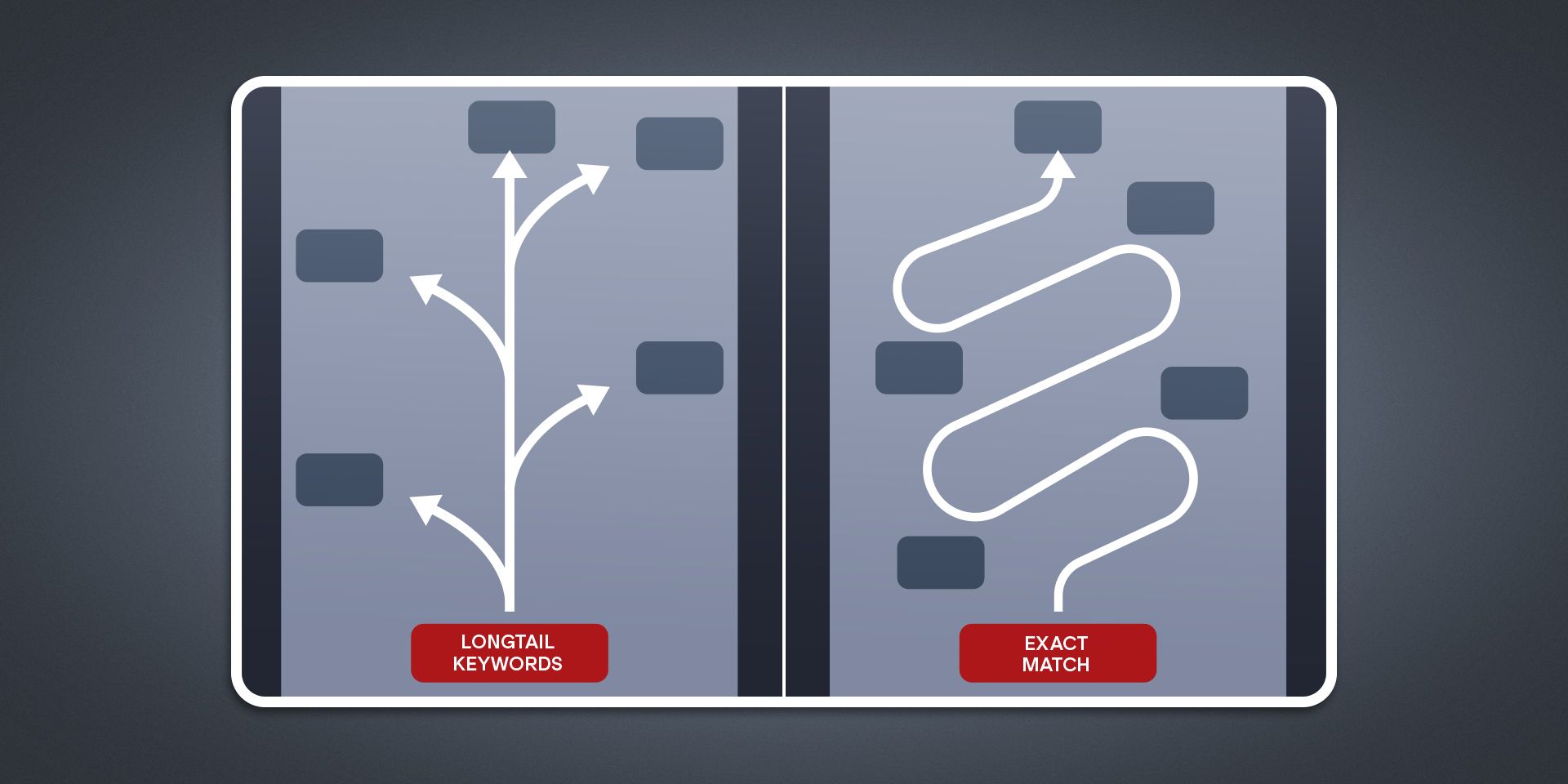
This is why it’s more important for your keywords and content to be clear and to thoroughly cover relevant topics. Exact-match keywords are things of the past. Why? People are using more natural language to perform searches, so semantic search, which uses AI and other signals to understand intent and other conceptual relationships, is now the norm. In other words, Organic Search is becoming Semantic Organic Search.

It doesn’t mean keywords are no longer important. You just use them differently. They map the route from entity to entity in a buyer’s journey: Problem to brand to product to solution, for example.

Keywords Are Your Intent Map (and Your Fastest Route to Better Conversions)

So we’ve established that keywords are the directions on the map to better web visibility.

How do you put together the best set of directions for your customers, then? We’ve mentioned it already: Intent.

There are four primary types of intent: Informational (I), Commercial (C), Transactional (T), and Navigational (N). Each of these has a unique pair of points A and B, and each industry further customizes them.

  • E-commerce: “best vitamin C serum” (C) vs “vitamin C serum price” (I) vs “buy vitamin C serum online” (T)

  • Lead gen: “roofing company near me” (N) vs “roof repair cost” (I) vs “schedule roof inspection” (T)

  • B2B/SaaS: “CRM for manufacturing” (I) vs “Salesforce vs HubSpot” (I) vs “CRM implementation partner” (T)

  • Travel/hospitality: “Airbnb or VRBO” (C) vs “Airbnbs in Seattle” (I) vs “book VRBO for Labor Day weekend” (T)

Your intent is conversions, but they are influenced by how well your pages align with search intent. If your conversions are newsletter sign-ups, your pages should include definitive information that elevates you as the authority in your industry.

The better aligned your pages are with your consumers’ intent, the more they’ll engage: They’ll stay to read what’s on your pages, then sign up to know just what you’re adding as soon as you add it, forward info to colleagues, and even interact with you if they are especially convinced. Ultimately, you’ll both reach your destination: Conversion.

Keyword Research in 2026: Market Intelligence Guiding Organic Search and Paid Media
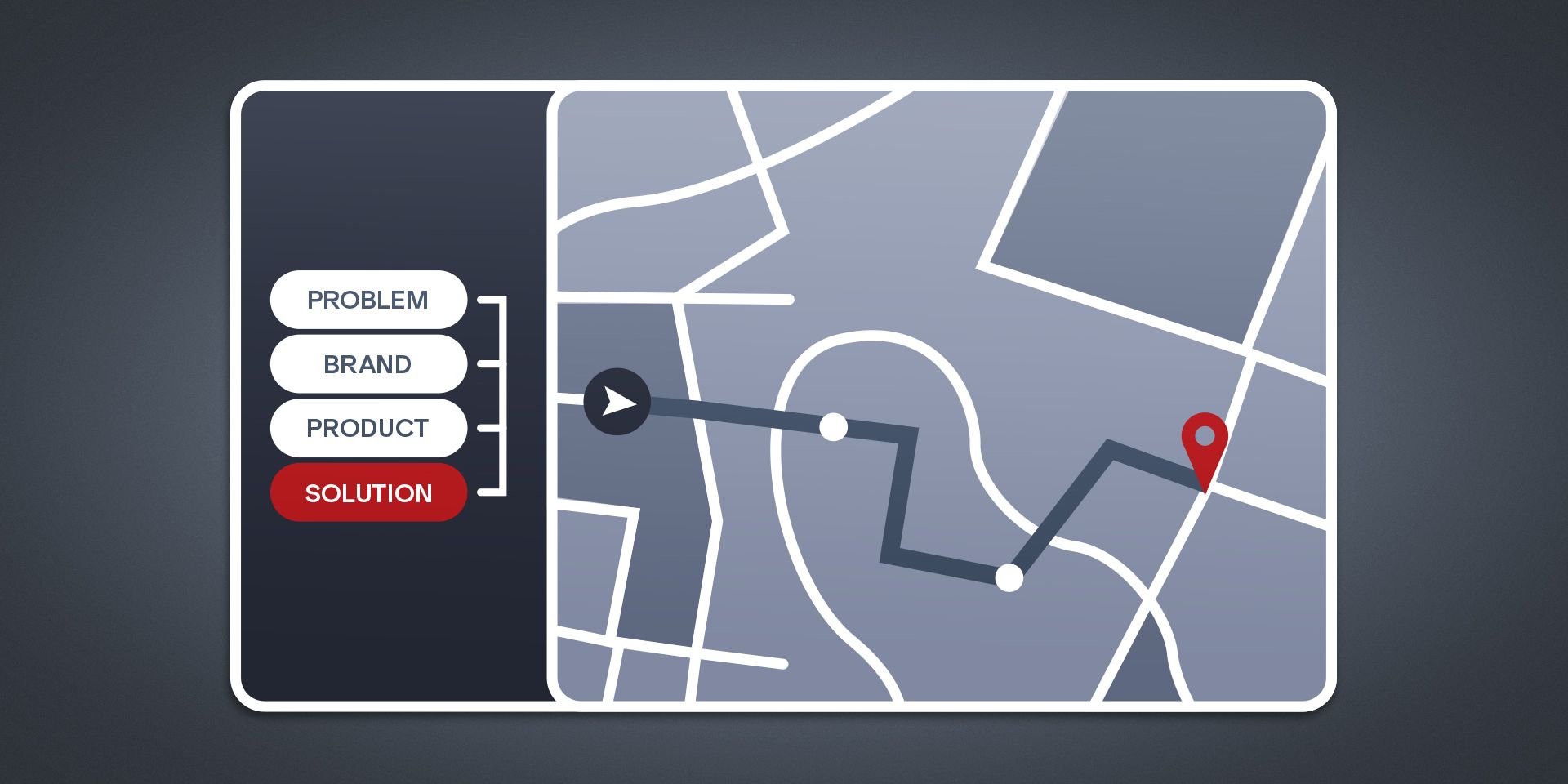
Even the best map makers have to start somewhere. Some are explorers themselves, while others are cartographers. Regardless, no one creates a new map from nothing; they always begin somewhere with a goal in mind.

Creating a map, especially one that guides Organic Search, content, and paid media for your organization, requires research and planning. To ensure your “map” includes the right details, you need a repeatable keyword research process.

Think of it as surveying the land before planning the roads. Start with your business KPIs: Revenue targets, key offers, and the target audiences. Next, collect the language (keywords!) that reflect how people are currently trying to achieve those goals.

Think of layering your sources like creating a map: Roads, elevation, landmarks. Collect query themes from Search Console, paid search reports, on-site search logs, and the phrases sales and support teams hear from customers, covering both potential and long-term interests.

Next, examine the SERPs for your primary topics to identify successful formats such as guides, comparisons, categories, tools, or local pages, along with recurring entities like brands, features, and use cases. Additionally, pay attention to repeated questions. Then group related terms into pathways, creating a plan that resembles a journey rather than a mere spreadsheet. These are your content pillars and should be backed by related content.

From this point, prioritize like a cartographer with limited paper and ink: Focus on routes with clear business value, strong intent, and realistic competition. If the terrain is rough (thin pages, weak internal linking, or technical issues), build the infrastructure first. A map is only as useful as its landmarks.

Do Search Volume, Competition, and Long-Tail Still Win?
Yes. In fact, these are how you are going to win conversions.

Not every road deserves to be paved. High-volume head terms resemble interstate highways: Busy, competitive, and full of travelers uncertain about their chosen exit. In contrast, long-tail keywords are like well-marked side streets and trailheads. They usually indicate clearer intent (“pricing,” “near me,” “for manufacturing,” “best for sensitive skin”), which makes it easier to connect the right page with the appropriate searcher.

The advantage of long-tail keywords increases when you think in clusters. One small query won’t significantly impact results. Still, a collection of related long-tail pages can generate meaningful traffic and leads while also building the topical authority that helps you compete for larger routes later.

Remember, the keyword isn’t the destination; the landing page is. If your map directs visitors to the wrong place, they’ll quickly backtrack. The goal isn’t just to “use” a keyword but to fulfill its intent in a way that the SERP rewards. Before publishing, check if the page answers the query. Is the next step clear (download, call, quote, demo)? Do internal links serve as signs guiding visitors rather than dead ends?

Structured Data, Content Quality, and Responsible AI Use

As AI-driven results grow, clarity becomes more important than repetition. Structured data is the legend in the corner of your map. These are the standardized symbols that guide machines on what they’re viewing. Schema markup can lessen ambiguity around products, organizations, FAQs, reviews, locations, and articles, enhancing eligibility for rich results and helping AI systems interpret your content with fewer guesses.

Start with the pages most related to revenue and trust, then gradually expand your coverage as your map grows. Accurate maps are essential, and in Organic Search, this means providing content that is truly helpful, specific, and credible. While AI tools can speed up initial drafts, they cannot replace expertise, original examples, or the nuanced details that show your deep understanding of the subject. Think of AI as a junior cartographer. It’s useful for creating rough sketches, but the final route needs human oversight, updates, and real-world evidence.

Measurement: Proving the Map Works

Even the best map needs field testing. Measurement is your compass: Impressions show demand, clicks show relevance, conversions show fit, and revenue shows whether you chose the right routes. Review performance monthly to spot pages earning impressions but not clicks (a sign your title, snippet, or intent match needs work), and revisit the bigger strategy quarterly to refresh clusters, retire dead ends, and expand into new terrain.

Why Partner With VELOX: Strategy + Execution + Reporting

In 2026 and beyond, keywords will still matter for the same reason maps do: They help you navigate change without getting lost. Build an intent-first keyword map, connect it to content and conversion paths, and keep it up to date as the landscape shifts.

VELOX is the perfect partner to map your AI search optimization and keyword intent strategies with; not only can we help with the cartography, we create custom reporting tools to show you how well your map is steering your ship and can help right any potential wrecks before they even happen.

Contact VELOX before you start your next Organic Search journey.


Search engines look nothing like they did in the era of keyword stuffing and "10 blue links." Today, users get AI Overviews, richer SERP features, and more conversational follow-ups right in the results, and brands are seeing lower click-through rates as a result.

So, it’s a fair question: Do keywords still matter?

Yes.

The difference now, and looking to the future, is while search has evolved, keywords are still the fastest means of mapping demand, intent, and revenue opportunities.

This doesn’t mean you pick a few one-size-fits-all keywords, plug them into your CMS, and forget about them for six months. You have to create comprehensive topic coverage, identify entities, and structure content that search engines and AI systems can reliably interpret and that readers can trust. Plus, you have to monitor data and re-strategize when necessary.

So how do you effectively integrate the best keywords into your marketing strategies to drive performance now and into your brand’s future? Here’s your roadmap.

What Do “Keywords” Mean to Organic Search Now and for Its Future?

Keywords mean everything to Organic Search.

If you’ve been using the web long enough to remember MapQuest, then you remember how tough it was to move from paper maps with every detail to digital ones without enough details to actually give directions.

An Organic Search strategy without keywords is essentially an early MapQuest download: A map that can’t give directions.

Keywords map how people get from point A: Wanting something, to point B: Acting on that want. Of course, humans don’t always take the most direct route from point A to point B, even when we’re using maps.

This is why it’s more important for your keywords and content to be clear and to thoroughly cover relevant topics. Exact-match keywords are things of the past. Why? People are using more natural language to perform searches, so semantic search, which uses AI and other signals to understand intent and other conceptual relationships, is now the norm. In other words, Organic Search is becoming Semantic Organic Search.

It doesn’t mean keywords are no longer important. You just use them differently. They map the route from entity to entity in a buyer’s journey: Problem to brand to product to solution, for example.

Keywords Are Your Intent Map (and Your Fastest Route to Better Conversions)

So we’ve established that keywords are the directions on the map to better web visibility.

How do you put together the best set of directions for your customers, then? We’ve mentioned it already: Intent.

There are four primary types of intent: Informational (I), Commercial (C), Transactional (T), and Navigational (N). Each of these has a unique pair of points A and B, and each industry further customizes them.

  • E-commerce: “best vitamin C serum” (C) vs “vitamin C serum price” (I) vs “buy vitamin C serum online” (T)

  • Lead gen: “roofing company near me” (N) vs “roof repair cost” (I) vs “schedule roof inspection” (T)

  • B2B/SaaS: “CRM for manufacturing” (I) vs “Salesforce vs HubSpot” (I) vs “CRM implementation partner” (T)

  • Travel/hospitality: “Airbnb or VRBO” (C) vs “Airbnbs in Seattle” (I) vs “book VRBO for Labor Day weekend” (T)

Your intent is conversions, but they are influenced by how well your pages align with search intent. If your conversions are newsletter sign-ups, your pages should include definitive information that elevates you as the authority in your industry.

The better aligned your pages are with your consumers’ intent, the more they’ll engage: They’ll stay to read what’s on your pages, then sign up to know just what you’re adding as soon as you add it, forward info to colleagues, and even interact with you if they are especially convinced. Ultimately, you’ll both reach your destination: Conversion.

Keyword Research in 2026: Market Intelligence Guiding Organic Search and Paid Media

Even the best map makers have to start somewhere. Some are explorers themselves, while others are cartographers. Regardless, no one creates a new map from nothing; they always begin somewhere with a goal in mind.

Creating a map, especially one that guides Organic Search, content, and paid media for your organization, requires research and planning. To ensure your “map” includes the right details, you need a repeatable keyword research process.

Think of it as surveying the land before planning the roads. Start with your business KPIs: Revenue targets, key offers, and the target audiences. Next, collect the language (keywords!) that reflect how people are currently trying to achieve those goals.

Think of layering your sources like creating a map: Roads, elevation, landmarks. Collect query themes from Search Console, paid search reports, on-site search logs, and the phrases sales and support teams hear from customers, covering both potential and long-term interests.

Next, examine the SERPs for your primary topics to identify successful formats such as guides, comparisons, categories, tools, or local pages, along with recurring entities like brands, features, and use cases. Additionally, pay attention to repeated questions. Then group related terms into pathways, creating a plan that resembles a journey rather than a mere spreadsheet. These are your content pillars and should be backed by related content.

From this point, prioritize like a cartographer with limited paper and ink: Focus on routes with clear business value, strong intent, and realistic competition. If the terrain is rough (thin pages, weak internal linking, or technical issues), build the infrastructure first. A map is only as useful as its landmarks.

Do Search Volume, Competition, and Long-Tail Still Win?

Yes. In fact, these are how you are going to win conversions.

Not every road deserves to be paved. High-volume head terms resemble interstate highways: Busy, competitive, and full of travelers uncertain about their chosen exit. In contrast, long-tail keywords are like well-marked side streets and trailheads. They usually indicate clearer intent (“pricing,” “near me,” “for manufacturing,” “best for sensitive skin”), which makes it easier to connect the right page with the appropriate searcher.

The advantage of long-tail keywords increases when you think in clusters. One small query won’t significantly impact results. Still, a collection of related long-tail pages can generate meaningful traffic and leads while also building the topical authority that helps you compete for larger routes later.

Remember, the keyword isn’t the destination; the landing page is. If your map directs visitors to the wrong place, they’ll quickly backtrack. The goal isn’t just to “use” a keyword but to fulfill its intent in a way that the SERP rewards. Before publishing, check if the page answers the query. Is the next step clear (download, call, quote, demo)? Do internal links serve as signs guiding visitors rather than dead ends?

Structured Data, Content Quality, and Responsible AI Use

As AI-driven results grow, clarity becomes more important than repetition. Structured data is the legend in the corner of your map. These are the standardized symbols that guide machines on what they’re viewing. Schema markup can lessen ambiguity around products, organizations, FAQs, reviews, locations, and articles, enhancing eligibility for rich results and helping AI systems interpret your content with fewer guesses.

Start with the pages most related to revenue and trust, then gradually expand your coverage as your map grows. Accurate maps are essential, and in Organic Search, this means providing content that is truly helpful, specific, and credible. While AI tools can speed up initial drafts, they cannot replace expertise, original examples, or the nuanced details that show your deep understanding of the subject. Think of AI as a junior cartographer. It’s useful for creating rough sketches, but the final route needs human oversight, updates, and real-world evidence.

Measurement: Proving the Map Works

Even the best map needs field testing. Measurement is your compass: Impressions show demand, clicks show relevance, conversions show fit, and revenue shows whether you chose the right routes. Review performance monthly to spot pages earning impressions but not clicks (a sign your title, snippet, or intent match needs work), and revisit the bigger strategy quarterly to refresh clusters, retire dead ends, and expand into new terrain.

Why Partner With VELOX: Strategy + Execution + Reporting

In 2026 and beyond, keywords will still matter for the same reason maps do: They help you navigate change without getting lost. Build an intent-first keyword map, connect it to content and conversion paths, and keep it up to date as the landscape shifts.

VELOX is the perfect partner to map your AI search optimization and keyword intent strategies with; not only can we help with the cartography, we create custom reporting tools to show you how well your map is steering your ship and can help right any potential wrecks before they even happen.

Contact VELOX before you start your next Organic Search journey.


Table of contents

Results

0 case studies

Thriving at Scale with a 302% Revenue Lift

Elevating Revenue By $1.68M

Achieving 350% ROI & New Monthly Users By 20K

#1 Keyword Rankings in Competitive Organic Search Results

+3K in Top 10 Keywords & 1,653% Revenue Growth

Socials

LinkedIn

Facebook

X (Twitter)

Instagram

Blog

0 articles

10 Tips to Get the Most Out of Your WordPress SEO

10 Things You Should Do When Launching a New Website

10 Reasons You Should Be Running Branded Campaigns

Why Keywords Will Always Matter in Organic Search

SEO Migration 2026: The Complete Guide

The Impact of Mobile Optimization on User Experience

Key Google Updates from 2019 Onward

Every Essential Google Update Since 2019

EXAMPLE: How to Increase Your Website Visibility on Google Search

How LLM Optimization Differs from SEO

Newsletter

Weekly updates, no spam

Contact

contact@veloxmedia.com

1-866-324-8899

518 S 9th St, Boise, ID 83702

Other

Privacy Policy

Legal

© 2026 VELOX. All Rights Reserved.

Results

0 case studies

Thriving at Scale with a 302% Revenue Lift

Elevating Revenue By $1.68M

Achieving 350% ROI & New Monthly Users By 20K

#1 Keyword Rankings in Competitive Organic Search Results

+3K in Top 10 Keywords & 1,653% Revenue Growth

Blog

0 articles

10 Tips to Get the Most Out of Your WordPress SEO

10 Things You Should Do When Launching a New Website

10 Reasons You Should Be Running Branded Campaigns

Why Keywords Will Always Matter in Organic Search

SEO Migration 2026: The Complete Guide

The Impact of Mobile Optimization on User Experience

Key Google Updates from 2019 Onward

Every Essential Google Update Since 2019

EXAMPLE: How to Increase Your Website Visibility on Google Search

How LLM Optimization Differs from SEO

Tools

Contact

Other

Newsletter

Weekly updates, no spam

© 2026 VELOX. All Rights Reserved.

Results

0 case studies

Thriving at Scale with a 302% Revenue Lift

Elevating Revenue By $1.68M

Achieving 350% ROI & New Monthly Users By 20K

#1 Keyword Rankings in Competitive Organic Search Results

+3K in Top 10 Keywords & 1,653% Revenue Growth

Blog

0 articles

10 Tips to Get the Most Out of Your WordPress SEO

10 Things You Should Do When Launching a New Website

10 Reasons You Should Be Running Branded Campaigns

Why Keywords Will Always Matter in Organic Search

SEO Migration 2026: The Complete Guide

The Impact of Mobile Optimization on User Experience

Key Google Updates from 2019 Onward

Every Essential Google Update Since 2019

EXAMPLE: How to Increase Your Website Visibility on Google Search

How LLM Optimization Differs from SEO

Company

Socials

Tools

Contact

Other

Newsletter

Weekly updates, no spam

© 2026 VELOX. All Rights Reserved.